The Search Phase Engine — People, Technology, Processes
The search phase is the foundation of a successful search fund. Performance during the operating phase is important, but success is, in no small part, driven by the right target selection during the search phase.
The phase is long, uncertain, and execution-intensive, and high performance during this phase requires more than effort – it also requires a well-designed and executed operating model. At its core, the operating model must be one that integrates people, technology, and processes into a single, cohesive engine capable of sustaining performance in the face of uncertainty.
At Sakai Capital, we designed our operating model with a belief that, while technology and process are essential enablers, people remain the irreplaceable core of the search phase.
People: The Irreplaceable Core of the Search Phase
The increasing impact of technology and its role in the sourcing and aggregation of information lead us to ask: How much of this search can, or should, be automated? We believe technology should be used to enhance the human components of a relationship-driven model, which we believe are critical to success.
For the searcher, the search phase represents a critical leadership development experience. Leading a team, being responsible for the development and performance of those individuals and aligning them around a common objective are all critical leadership development experiences for the eventual role of CEO. These leadership skills cannot be outsourced to AI; they are learned only through direct experience.
The search journey is also long and emotionally demanding. A culture grounded in learning, collaboration, and shared ownership provides resilience that pure technology cannot yet replicate. Arguing over investment theses, challenging assumptions, and building trust through daily interaction all play a critical role in maintaining the effort over a multi-year search.
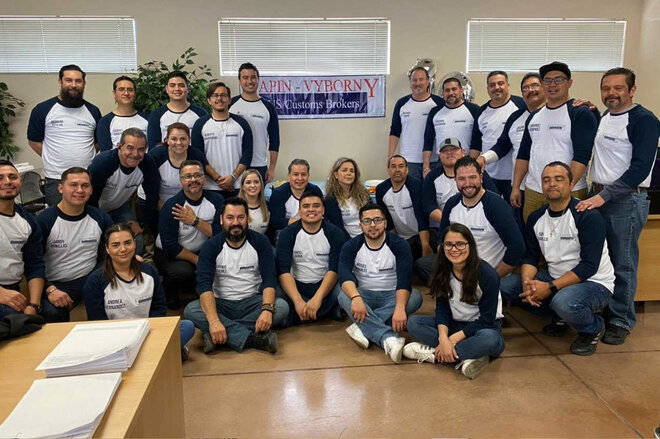
For us, interns play a central role in this people-first model. Beyond execution capacity, they bring both energy and personal networks that improve the search process. For interns, the rapid iterations required in the search phase are formative and offer exposure to the day-to-day tasks of several professional services careers, including consulting, investment banking, and traditional private equity.
At Sakai Capital, we spent considerable time designing the optimal team structure. We concluded that four to five interns strike the right balance between scale and manageability. Instead of prioritizing late-college interns who may rotate frequently, we focused on the earlier college stage, typically students in their third or fourth semesters. These interns work part-time but are highly motivated to stay throughout the search phase.
There is, of course, a trade-off here. We chose to invest more upfront in training in exchange for longer tenure and deeper cultural integration. Every two months, we conduct internal training on topics selected by the team, ranging from industry analysis to financial modeling and communication skills. This has the dual effect of making the internship a more effective building exercise for our interns, while also freeing up time from managing partners as interns take on increasingly complex tasks.
There is strong evidence for this: for many successful search funds, interns who stayed throughout the search phase became so critical as to become full-time employees of the acquired company.
In addition to our undergraduate interns, we also incorporated MBA interns (many of whom are gearing up to launch their own search) to support industry thesis development, process improvements, and financial analysis. This enables the managing partners to focus on high-impact activities, including advanced deal discussions, seller engagement, investor relations, and overall team coordination.
Operationally, we work in small execution cells: two MBA interns paired with two junior interns. MBA interns, often with consulting or private equity backgrounds, provide structure and mentorship, while junior interns drive sourcing and execution. This model balances experience, scalability, and learning while maximizing output.
Technology: Building a Scalable and Disciplined Search Engine
While people sit at the center of the search, technology is the enabler that allows a small team to operate with scale and consistency. In a relationship-driven market like Mexico, technology is useful as long as it frees time for higher-value human interaction.
We view technology as an integrated system supporting four objectives: team management, sourcing, outreach, and seller intelligence. Our tech stack combines institutional databases with proprietary tooling to remain both robust and flexible.
For lead generation, we combine AI lead generation platforms such as Inven with traditional databases like Dun & Bradstreet to build a comprehensive list of companies. To complement this, we also developed a proprietary tool for scalable lead generation, integrating custom scraping capabilities built on traditional Python libraries with AI parsing. This hybrid approach allows us to dynamically expand lead lists, enrich company profiles, and adapt sourcing criteria in real time.
Identifying the right decision-maker is as critical as identifying the right company. We use tools such as Apollo and LinkedIn Sales Navigator to source and validate contacts. Outreach is managed through email sequencing tools that also manage sender reputation and warm-up, allowing the team to focus on message quality and seller engagement over technical restrictions.
All activity flows into HubSpot, our centralized CRM, which serves to manage our pipeline and deal stages, coordinate ownership internally, and give partners real-time visibility into execution. As the tech stack grew increasingly complex, external integration tools such as Make became critical to ensure the CRM was consistently updated with the latest deal activity.
Finally, we maintain a simple digital presence using lightweight infrastructure (i.e., website, LinkedIn). Credibility matters most in early outreach, and a clean digital footprint reinforces legitimacy with sellers without adding complexity.
Processes: Turning Effort into Execution
As the final component of the operating model, processes define the rails on which people and technology can execute the work successfully and consistently. In the search phase, these processes serve to build the pipeline and ensure continuous improvement.
Every week, we conduct two sourcing reviews with each intern where new leads are evaluated for outreach. Initially, this process took a significant amount of time as interns developed pattern recognition but has now become streamlined with higher average lead quality. Similarly, as our pipeline has matured, our efforts have shifted more towards advanced deal analyses in focused sprints. This trade-off in time reflects improved pattern recognition and tighter feedback loops, but both processes were planned from the outset.
In addition to our deal analysis processes, we established team touchpoints to reinforce accountability. We meet three times per week: Mondays to align on goals, Wednesdays for mid-week review, and Fridays to assess progress and capture learnings. This rhythm has maintained alignment without creating meeting overload.
Externally, we developed standardized processes to manage broker relationships and referral networks, treating them as long-term assets rather than transactional inputs.
Finally, we prioritize readiness. All core deal materials—NDAs, financial models, seller presentations, investor decks, teasers, and CIM templates—are pre-built and standardized. This dramatically reduces response time when a high-quality opportunity emerges, allowing the team to focus on judgment, diligence, and relationship-building.
To summarize, each searcher must design an operating model that maximizes their chances of successfully acquiring a company. Because searchers hold different views on how best to achieve this objective, they make different choices regarding team size, the profiles they hire, and the extent to which they rely on automation. Some searchers use mostly automated systems and limit the number of human interactions throughout the search process, while others put a primary emphasis on having humans work together at all stages of the search process.
Process design also varies significantly, including the degree of reliance on broker-led deals versus a proprietary sourcing approach, the trade-off between lead quality and lead quantity, and differences in ways of working—such as remote versus in-person setups or task-oriented versus more flexible operating styles. For us, the model that has yielded the best results so far is a hybrid approach that combines AI-driven automation with human interaction, with a highly structured and organized approach to processes and tasks, enabling managing partners to be free from routine tasks, and enabling them to concentrate on more advanced leads of higher quality.
About Adela Kably & Giancarlo Solórzano
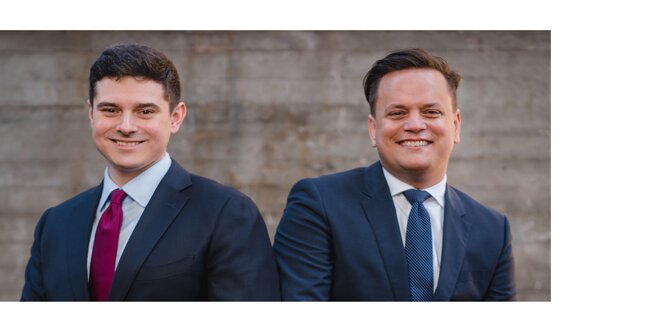
Adela Kably and Giancarlo Solórzano are the co-founders of Sakai Capital, a Mexican search fund. They previously worked together at Kearney, where Adela specialized in growth strategy, commercial initiatives, and commercial due diligence, while Giancarlo focused on operations, organization, and supply chain. Adela holds a BBA from ITAM and is completing an Executive MBA at Kellogg School of Management, as well as a master’s degree in data analytics. Giancarlo holds a BS in Mechanical Engineering from the University of Notre Dame and an MBA from Yale School of Management. Their partnership is built on complementary skill sets, a hands-on approach to business, and shared values cemented throughout their work together.
About Sakai Capital
Sakai Capital is a Mexico-based search fund founded by Adela Kably and Giancarlo Solórzano, focused on acquiring and operating a single, privately held business. The firm follows an operator-led ownership model and works closely with a small group of long-term investors throughout the acquisition and operating phases.
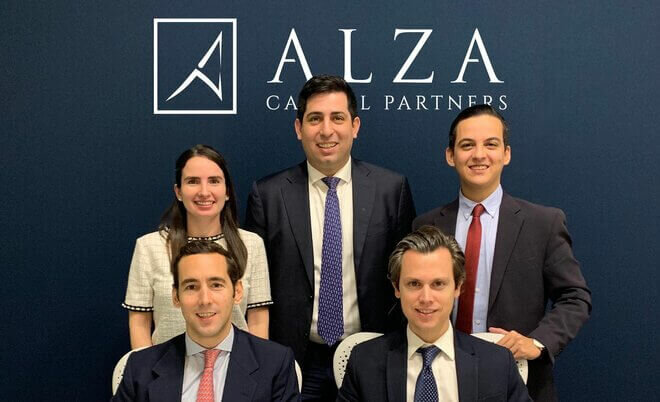
ALZA is an active investor in Sakai Capital.



.jpg)
.jpg)
.jpg)
.jpg)
.jpg)
.jpg)